Blog Post 2 – Independent Inquiry on Design Thinking
Design thinking is a human-centered, solution-focused, iterative approach to solving problems. It involves understanding people’s needs and motivations, reframing a problem and being hands on when coming up with new ways to deal with problems (Dam, 2025; Interaction Design Foundation, n.d.). Design thinking promotes new ideas, brings forward creative solutions, and helps when handling unknown situations (Interaction Design Foundation, n.d.). It is learned by actively engaging in your learning, and strengthened through collaboration with others, such as through polls and debates. It is used when there is a single problem statement in mind, and is not as time consuming and expensive as trial and error methods (Han, 2022). Design thinking is about identifying and empathizing with the users’ needs, looking at the problem from the user’s perspective, generating ideas through working with others and actively building prototypes (Foster, 2019).
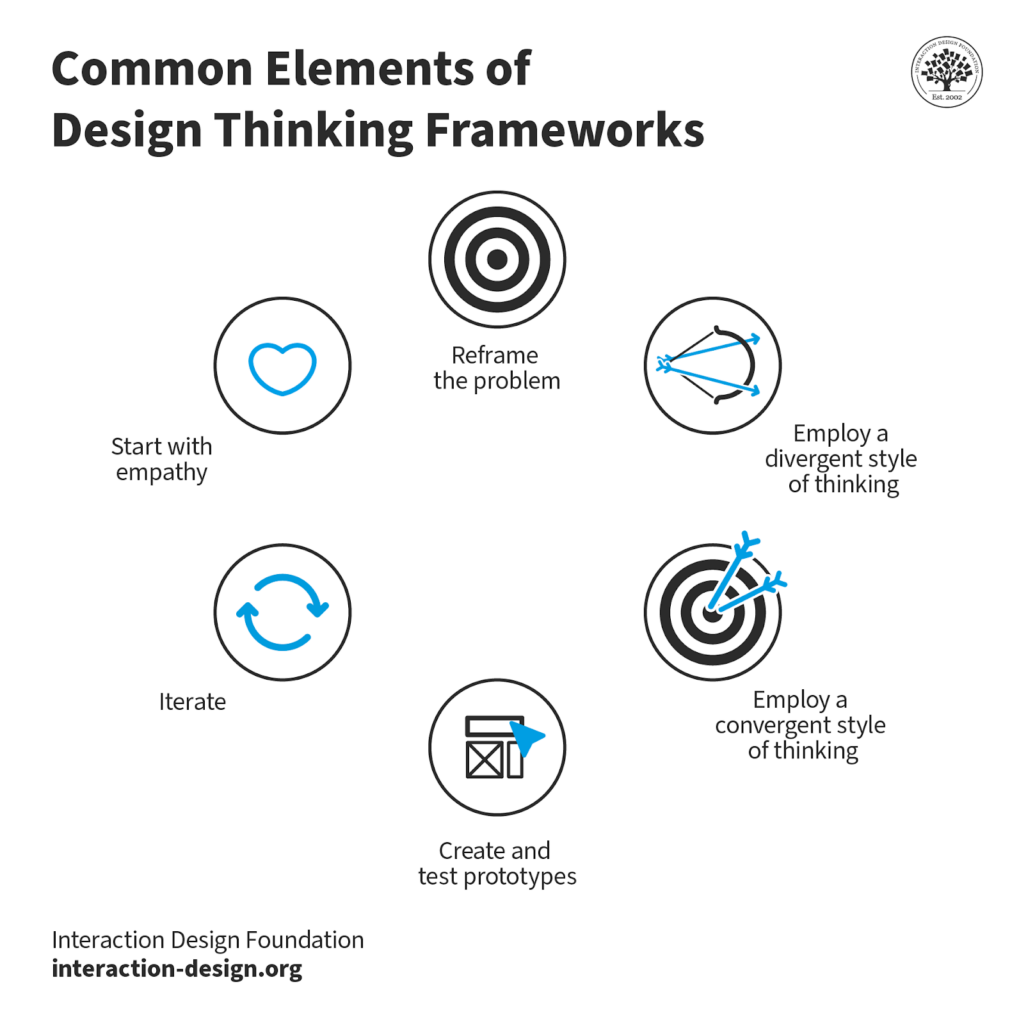
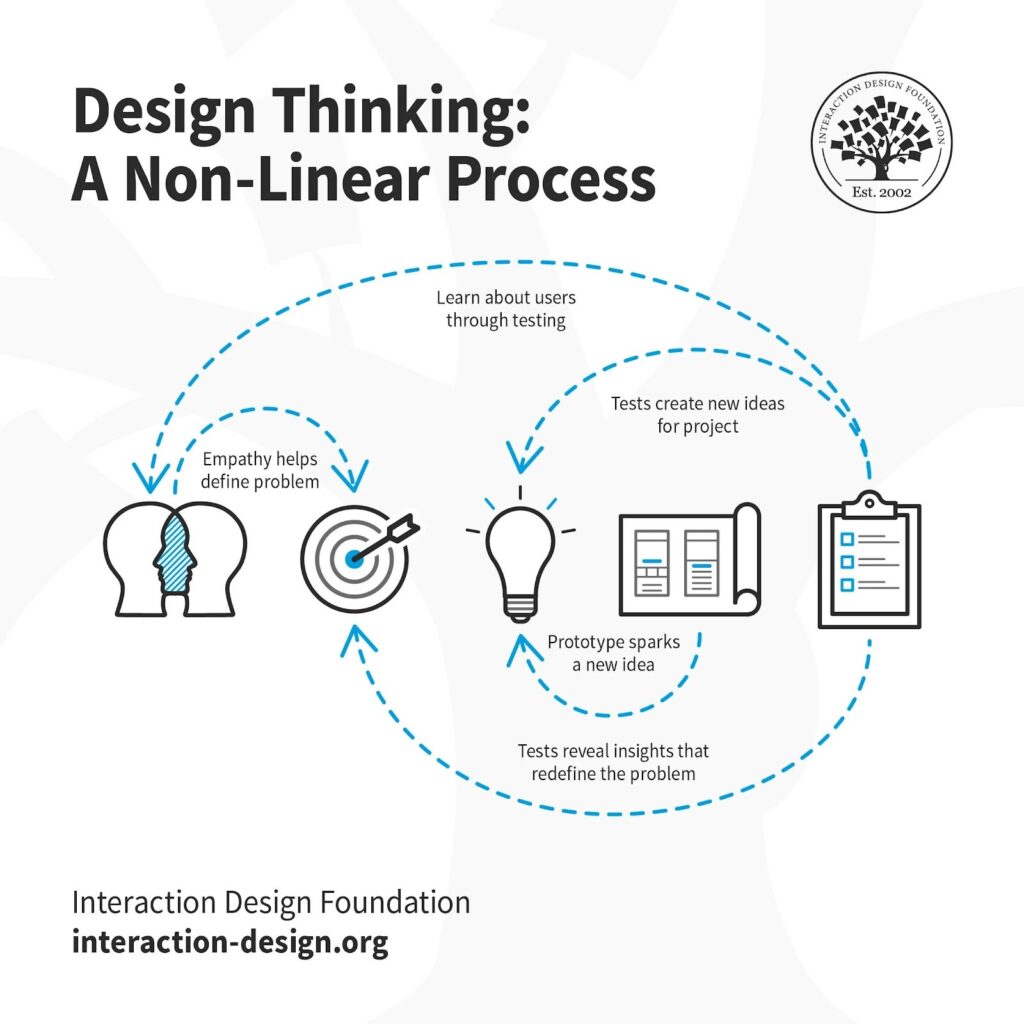
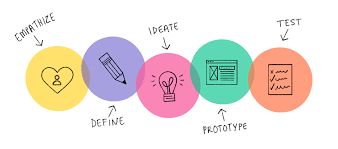
There are between 3-7 stages when it comes to the process of design thinking. We are going to focus on five main steps, the first one being “Empathize”. This means focusing on the user and their needs, consulting others, conducting observations and engaging in our user’s environment. We want to gain a better understanding of the user’s experiences and the problem you are moving towards solving (Dam, 2025). The second stage is “Define”, which means stating the problem statement. This is done through examining our observations and other information (Dam, 2025). “Ideate” is the third stage. In this step, we want to think about and pick out creative solutions to our problem statement (Dam, 2025). The fourth stage is “Prototype”, which involves identifying and starting to create a solution. We can create a variety of prototypes, or models, in this stage (Dam, 2025). The last stage is “Test”. This is completed through testing out our prototypes. It is important to keep in mind that design thinking is not linear, and many of these steps can be repeated in order to properly identify a solution (Dam, 2025).
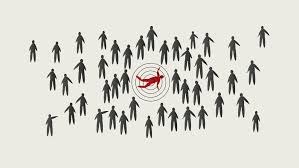
Our chosen topic, the bystander effect, explores why people are less likely to help in emergencies when others are present. I think that design thinking aligns strongly with this topic, as both involve understanding human behaviour and decision-making. In the empathize stage, we can focus on the experiences of middle school students who have witnessed or experienced bullying or other harmful situations, and can do this by engaging in a school environment and consulting students regarding their experiences. The define stage helps us frame the problem in a human-centered way, such as focusing on all of the reasons why a student may not help during a harmful situation, and not solely on the fact that students do not intervene. Lastly, the ideate and prototype stages are also relevant because coming up with solutions to eliminate the bystander effect require many creative strategies such as role-playing and interactive scenarios.
I believe that design thinking has a meaningful place in our final Interactive Learning Design. Our project focuses on teaching middle schoolers about the bystander effect, in hopes that it will help them recognize and reduce this effect. This project benefits from a human-centered design process. We can apply design thinking in this project by empathizing with middle school children, helping when creating interactive learning tools, and by prototyping, testing and revising learning tools. Design thinking also encourages collaboration with others, which fits well with interactive learning components of our project. Overall, I think that design thinking will strengthen our project by focusing on the learner and encouraging continuous improvement.
References:
Dam, R. F. (2025). The 5 stages in the design thinking process. Interaction Design Foundation. https://www.interaction-design.org/literature/article/5-stages-in-the-design-thinking-process
Foster, M. K. (2019). Design Thinking: A Creative Approach to Problem Solving. Management Teaching Review, 6(2), 123-140. https://doi.org/10.1177/2379298119871468
Han, E. (2022). What is design thinking & why is it important? Harvard Business School Online. https://online.hbs.edu/blog/post/what-is-design-thinking
Interaction Design Foundation. (n.d.). Design thinking. Interaction Design Foundation. https://www.interaction-design.org/literature/topics/design-thinking